Need Help or Have Questions
Order online
PRODUCT CENTER
- Stone Crushing Plant
- Sand Making Machine
- Stone Grinding Plant
- Ore Beneficiation Plant
- Production line
Hot Products
- Jaw Crusher
- Hammer Crusher
- Impact Crusher
- Cone Crusher
- Combination Crusher
- Stone Jaw Crusher
- Mobile Crushing Station
- Sand Maker
- Sand Washer
- Circular Vibrating Screen
Contact Us
- E-mail: sales@hxjq.com
- MSN: hxjq@hxjq.cn
- Tel: 0086-371-67833161
- Yahoo: hongxingmachinery@yahoo.com

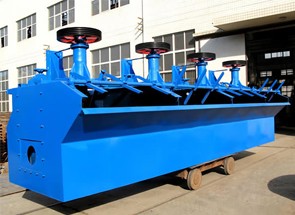
Flotation Machine
- Features
- Inquiry
Introduction to Flotation Machine
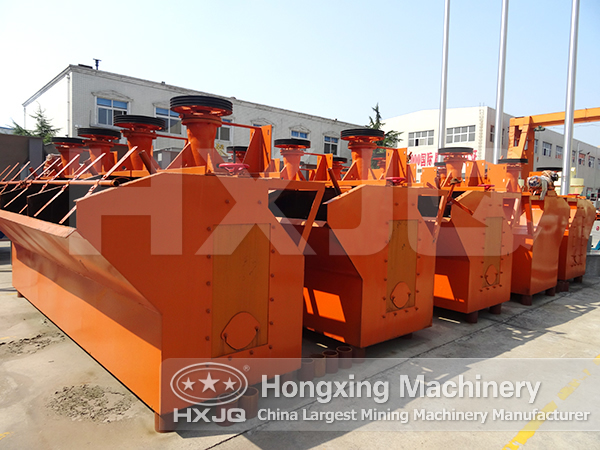
Flotation machine, which is also called floation separator, is applied for separating nonferrous metal and ferrous metal and nonmetal such as fluorite and talc. Compared with flotation cells, its uniqueness lies in big size, lower power loss and light wear and tear of the impeller. Flotation machine is commonly used ore flotation equipment in the ore dressing plants and plays a crucial role in the fast development of mining industry in China.
.jpg)
Major Types of Flotation Machine
The major types of mechanical flotation machine include inflatable flotation machine, flotation separator or hybrid inflatable flotation machine, gas precipitation flotation machine. Sometimes the flotation cell is also called cell flotation in some other countries due to their long using and calling habit and the word flotation-cell is also often used in Chinese mining market.
Working Principle of Flotation Machine:
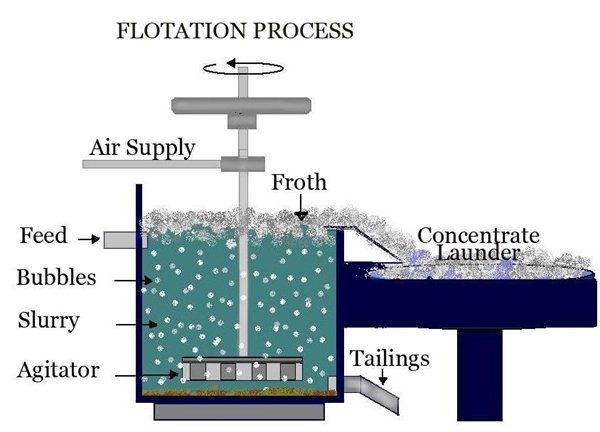
When flotation cell works, slurry is inhaled from the bottom of the trough to the space between impellers. Meanwhile, the low pressure air sent by fan is transported to this area through the air distributor in the hollow shaft. After sufficient mixing, the slurry is pushed out by the impellers, and then goes to the trough. When the froth rises to the stable level, after the enrichment processing, it overflows to the froth trough from the overflow weir. Another part of ore slurry flows to lower part of impellers for the remixing with air. The remaining slurry flows to the next trough until it becomes residue.
Technical parameters
| Category | Specification Model |
Effective cubage (m³) |
Processing capacity (m³/min) |
Main shaft loam board | Dimensions (L×W×H) (mm) |
Single trough Weight (t) |
|||
| Power (kw) |
Rotate speed (r/min) |
Rotate speed (r/min) |
Power (kw) |
||||||
| XJK type flotation machine |
XJK-0.35 | 0.35 | 0.18-0.4 | 1.5 | 483 | 25 | 1.1 | 700×700×700 | 0.5 |
| XJK-0.62 | 0.62 | 0.3-0.9 | 3.0 | 400 | 25 | 1.1 | 900×820×850 | 1.0 | |
| XJK-1.1 | 1.1 | 0.6-1.6 | 5.5 | 330 | 25 | 1.1 | 1100×1100×1000 | 1.4 | |
| XJK-2.8 | 2.8 | 1.5-3.5 | 11 | 280 | 25 | 1.1 | 1750×1600×1100 | 2.5 | |
| XJK-5.8 | 5.8 | 5-7 | 22 | 240 | 25 | 1.5 | 2200×2200×1200 | 3.6 | |
| SF type flotation machine |
SF-0.37 | 0.37 | 0.2-0.4 | 1.5 | 386 | 25 | 1.1 | 700×700×750 | 0.5 |
| SF-0.7 | 0.7 | 0.3-0.9 | 3 | 400 | 25 | 1.1 | 900×820×950 | 1.0 | |
| SF-1.2 | 1.2 | 0.6-1.6 | 5.5 | 330 | 25 | 1.1 | 1100×1100×1100 | 1.9 | |
| SF-2.8 | 2.8 | 1.5-3.5 | 11 | 268 | 25 | 1.1 | 1750×1600×1150 | 2.6 | |
| SF-4 | 4 | 2-4 | 15 | 220 | 25 | 1.5 | 1850×2050×1200 | 2.9 | |
| SF-8 | 8 | 4-8 | 30 | 191 | 25 | 1.5 | 2200×2900×1400 | 4.2 | |
| SF-10 | 10 | 5-10 | 30 | 191 | 25 | 1.5 | 2200×2900×1700 | 4.5 | |
| SF-20 | 20 | 5-20 | 30×2 | 191 | 25 | 1.5 | 2850×3800×2000 | 9.9 | |
| JJF type flotation machine |
JJF-2 | 2 | 1-3 | 7.5 | 443 | 25 | 1.5 | 1400×1400×1100 | 1.7 |
| JJF-4 | 4 | 2-4 | 11 | 305 | 25 | 1.5 | 1600×2150×1250 | 2.4 | |
| JJF-8 | 8 | 4-8 | 22 | 233 | 25 | 1.5 | 2200×2900×1400 | 4.5 | |
| JJF-10 | 10 | 5-10 | 22 | 233 | 25 | 1.5 | 2200×2900×1700 | 4.9 | |
| JJF-16 | 16 | 5-16 | 30 | 180 | 25 | 1.5 | 2850×3800×1700 | 8.0 | |
| JJF-20 | 20 | 5-20 | 37 | 180 | 25 | 1.5 | 2850×3800×2000 | 10.5 | |